Mobile app research: why Claude, ChatGPT and Gemini fall short
Why better prompts won't fix missing data, and how MCP is changing that
"Can't Claude just look this up itself?"
It's a question many people are starting to ask.
After all, today's AI assistants can write software, summarise research papers, analyse contracts, generate presentations, and explain highly technical concepts in seconds. Whether you're using Claude, ChatGPT, Gemini, Copilot, or another large language model, the capabilities can feel remarkable.
So why do they sometimes struggle with questions that appear deceptively simple?
Imagine you're a product manager at a fintech company. You open your AI assistant and ask:
Which neobanks are currently in the UK App Store Top 100 but not in the US Top 100?
It feels like exactly the type of question modern AI should answer instantly.
Instead, you might receive a response such as:
"I wasn't able to retrieve the full chart data."
Or perhaps:
"Based on the information I could access, here are some possibilities..."
The answer feels incomplete. Sometimes it is.
The natural assumption is that the AI isn't capable enough. In reality, the problem is often something entirely different. The limitation isn't intelligence. It's access.
The Real Problem Isn't AI
The most advanced AI models available today are remarkably good at reasoning. Once they have the right information, they can compare, analyse, summarise, identify patterns and explain findings with impressive accuracy.
The challenge is that AI assistants can only reason over the information available to them. That sounds obvious, yet it is one of the most misunderstood limitations of modern AI.
When an AI assistant cannot access a dataset, it cannot analyse it. When the available information is incomplete, the resulting answer will often be incomplete too. This isn't a limitation unique to Claude. It isn't unique to ChatGPT or Gemini either. It is a challenge shared by every AI assistant that lacks direct access to the information required to answer a question confidently.
Most people think of the internet as one giant searchable database. In reality, much of the world's most valuable information sits behind what might be described as invisible data walls. These are not always security barriers. More often, they are technical barriers.
Consider how much business-critical information exists inside internal CRM systems, financial platforms, healthcare databases, regulatory repositories, business intelligence tools, and specialist industry datasets. The information exists, but it is not necessarily available through a conventional web search.
Even publicly accessible websites can present challenges. Many modern applications rely heavily on JavaScript to build pages dynamically. A human visitor sees the fully rendered experience. A crawler may only see a partial representation of that same information.
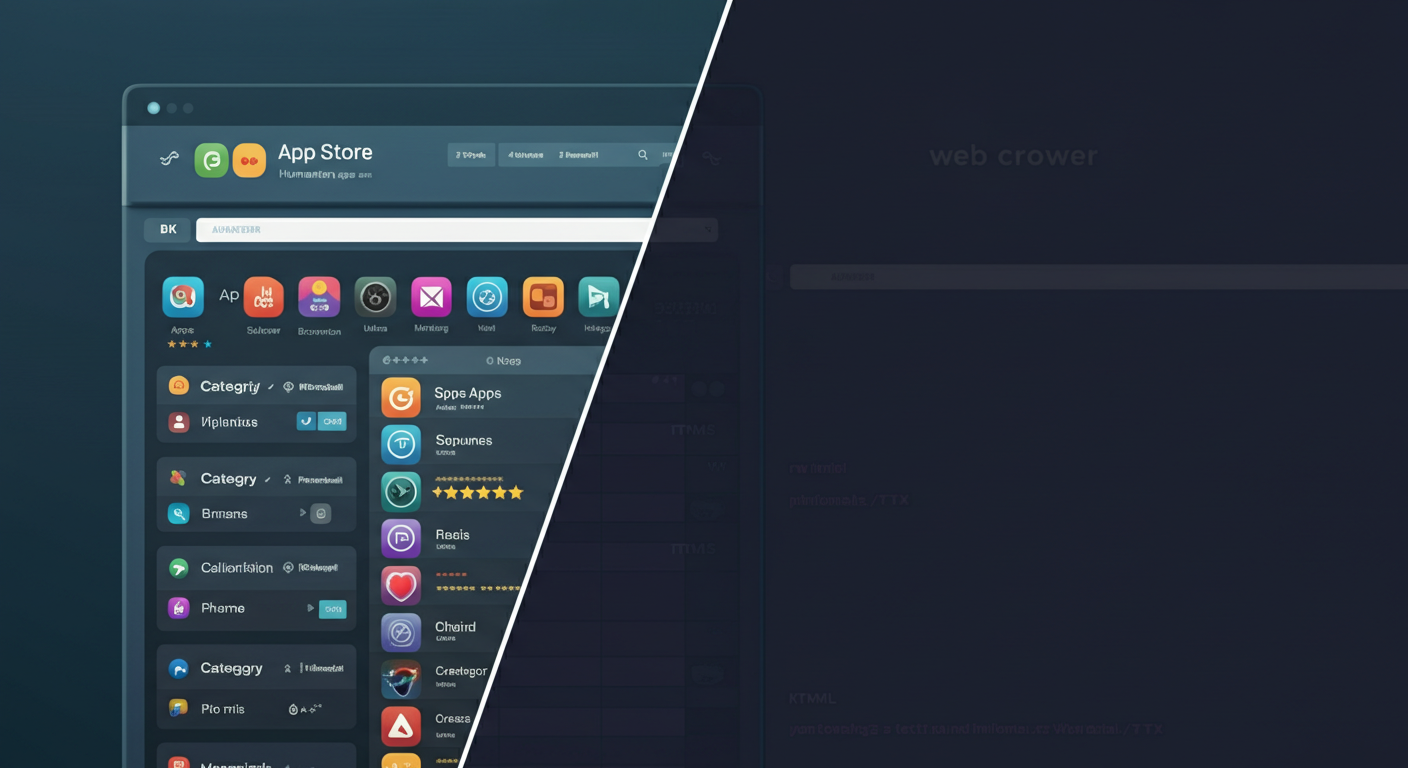
The result is not necessarily incorrect information. It is incomplete information. And incomplete information inevitably leads to uncertain answers.
Why Better Prompting Doesn't Fix It
When an AI assistant struggles to answer a question, many users instinctively try to improve the prompt. Perhaps the request needs to be more specific. Perhaps the wording is wrong. Perhaps the question should be broken into smaller steps. Prompting absolutely matters, and better prompts often produce better results. However, prompting cannot solve a missing data problem. You cannot prompt an AI into analysing information it cannot access.
This is why certain categories of questions frequently produce inconsistent results. Competitive benchmarking, historical trend analysis, cross-market comparisons, SDK adoption tracking, regulatory mapping, and internal business reporting often depend on datasets that are not readily available through public web search. These are not reasoning problems. They are data access problems.
For business leaders, this distinction matters. Many organisations are currently experimenting with AI assistants and discovering that the quality of answers varies dramatically depending on what information the model can access. The difference between a useful assistant and an unreliable one is often not the model itself, but the quality of the context available to it.
Why Context Is Becoming More Important Than Capability
Over the last few years, most attention has focused on making AI models smarter. Larger models, better reasoning, faster responses, and longer context windows have dominated industry discussion. What is becoming increasingly clear is that intelligence alone is not enough. An AI assistant can only reason over the information it can see, and the quality of the answer is often determined not by the model itself, but by the quality of the context available to it.
A useful way to think about modern AI is:
AI = Reasoning + Context
Without reliable context, even the best models are forced to estimate. They search for clues, fill gaps with probabilities, and often return uncertain answers. When high-quality context is available, those same models can analyse, compare, explain and recommend with significantly greater confidence. This shift is becoming one of the most important developments in the AI industry.
Why MCP Matters
This is one of the reasons the Model Context Protocol (MCP) has attracted so much attention.
MCP provides a standard way for AI assistants to connect directly to specialist tools, systems and datasets. Rather than relying entirely on public web search, AI assistants can access structured information from trusted sources and use that information as part of their reasoning process.
The result is not a smarter model. It is a better-informed model. That distinction matters. The future of AI is unlikely to be defined solely by larger models or more parameters. It will increasingly be shaped by how effectively those models can access and interact with the information that organisations actually care about.
The most capable of these specialist sources are not passive databases but Agents in their own right. Appnalysis is one of them: when Claude, ChatGPT or Gemini calls it via MCP, Appnalysis runs its own internal reasoning loop across chart, listing, package and regulatory data before returning an interpreted answer. Two agentic loops run, and the assistant's answer is only as good as the Agent on the other end.
Could You Just Build This Yourself?
One response to this shift is understandable:
"Couldn't I just build an AI agent that does this?"
Increasingly, the answer is yes. Modern AI tools make it easier than ever to create custom agents, write integration code, automate research workflows and connect external data sources. A capable technical team could build a first version of almost anything.
But that is no longer the most useful question. The better question is whether you should.
Why Claude, ChatGPT and Gemini Still Struggle With Some Questions
Why better prompts won't fix missing data, and how MCP is changing that
"Can't Claude just look this up itself?"
It's a question many people are starting to ask.
After all, today's AI assistants can write software, summarise research papers, analyse contracts, generate presentations, and explain highly technical concepts in seconds. Whether you're using Claude, ChatGPT, Gemini, Copilot, or another large language model, the capabilities can feel remarkable.
So why do they sometimes struggle with questions that appear deceptively simple?
Imagine you're a product manager at a fintech company. You open your AI assistant and ask:
Which neobanks are currently in the UK App Store Top 100 but not in the US Top 100?
It feels like exactly the type of question modern AI should answer instantly.
Instead, you might receive a response such as:
"I wasn't able to retrieve the full chart data."
Or perhaps:
"Based on the information I could access, here are some possibilities..."
The answer feels incomplete. Sometimes it is.
The natural assumption is that the AI isn't capable enough. In reality, the problem is often something entirely different.
The limitation isn't intelligence.
It's access.
The Real Problem Isn't AI
The most advanced AI models available today are remarkably good at reasoning. Once they have the right information, they can compare, analyse, summarise, identify patterns and explain findings with impressive accuracy.
The challenge is that AI assistants can only reason over the information available to them.
That sounds obvious, yet it is one of the most misunderstood limitations of modern AI.
When an AI assistant cannot access a dataset, it cannot analyse it. When the available information is incomplete, the resulting answer will often be incomplete too.
This isn't a limitation unique to Claude. It isn't unique to ChatGPT or Gemini either. It is a challenge shared by every AI assistant that lacks direct access to the information required to answer a question confidently.
Most people think of the internet as one giant searchable database. In reality, much of the world's most valuable information sits behind what might be described as invisible data walls.
These are not always security barriers. More often, they are technical barriers.
Consider how much business-critical information exists inside internal CRM systems, financial platforms, healthcare databases, regulatory repositories, business intelligence tools, and specialist industry datasets. The information exists, but it is not necessarily available through a conventional web search.
Even publicly accessible websites can present challenges. Many modern applications rely heavily on JavaScript to build pages dynamically. A human visitor sees the fully rendered experience. A crawler may only see a partial representation of that same information.
The result is not necessarily incorrect information.
It is incomplete information.
And incomplete information inevitably leads to uncertain answers.
Why Better Prompting Doesn't Fix It
When an AI assistant struggles to answer a question, many users instinctively try to improve the prompt.
Perhaps the request needs to be more specific. Perhaps the wording is wrong. Perhaps the question should be broken into smaller steps.
Prompting absolutely matters. Better prompts often produce better results.
However, prompting cannot solve a missing data problem.
You cannot prompt an AI into analysing information it cannot access.
This is why certain categories of questions frequently produce inconsistent results. Competitive benchmarking, historical trend analysis, cross-market comparisons, SDK adoption tracking, regulatory mapping, and internal business reporting often depend on datasets that are not readily available through public web search.
These are not reasoning problems.
They are data access problems.
For business leaders, this distinction matters. Many organisations are currently experimenting with AI assistants and discovering that the quality of answers varies dramatically depending on what information the model can access. The difference between a useful assistant and an unreliable one is often not the model itself, but the quality of the context available to it.
Why Context Is Becoming More Important Than Capability
Over the last few years, most attention has focused on making AI models smarter. Larger models, better reasoning, faster responses, and longer context windows have dominated industry discussion.
What is becoming increasingly clear is that intelligence alone is not enough.
An AI assistant can only reason over the information it can see.
The quality of the answer is often determined not by the model itself, but by the quality of the context available to it.
A useful way to think about modern AI is:
AI = Reasoning + Context
Without reliable context, even the best models are forced to estimate. They search for clues, fill gaps with probabilities, and often return uncertain answers. When high-quality context is available, those same models can analyse, compare, explain and recommend with significantly greater confidence.
This shift is becoming one of the most important developments in the AI industry.
Why MCP Matters
This is one of the reasons the Model Context Protocol (MCP) has attracted so much attention.
MCP provides a standard way for AI assistants to connect directly to specialist tools, systems and datasets. Rather than relying entirely on public web search, AI assistants can access structured information from trusted sources and use that information as part of their reasoning process.
The result is not a smarter model.
It is a better-informed model.
That distinction matters.
The future of AI is unlikely to be defined solely by larger models or more parameters. It will increasingly be shaped by how effectively those models can access and interact with the information that organisations actually care about.
The most capable of these specialist sources are not passive databases but Agents in their own right. Appnalysis is one of them: when Claude, ChatGPT or Gemini calls it via MCP, Appnalysis runs its own internal reasoning loop across chart, listing, package and regulatory data before returning an interpreted answer. Two agentic loops run, and the assistant's answer is only as good as the Agent on the other end.
Could You Just Build This Yourself?
One response to this shift is understandable:
"Couldn’t I just build an AI agent that does this?"
Increasingly, the answer is yes.
Modern AI tools make it easier than ever to create custom agents, write integration code, automate research workflows and connect external data sources. A capable technical team could build a first version of almost anything.
But that is no longer the most useful question.
The better question is whether you should.
Building the first version is often the easy part. Maintaining it is where the real work begins.
Data sources change. APIs evolve. Websites are redesigned. Categories shift. New regulations emerge. Platforms deprecate old behaviours and introduce new ones. What worked six months ago may no longer produce reliable results today.
The challenge is rarely producing an answer once.
The challenge is maintaining confidence in the answer over time.
That requires domain knowledge, data quality processes, monitoring, interpretation, and continuous maintenance. It also requires knowing what the data means in context.
This is where specialist MCP providers become valuable. Rather than spending time becoming experts in a domain that is not central to your business, organisations can consume maintained expertise through a standard interface and focus on the decisions that matter.
In the same way that most companies no longer build their own CRM, accounting platform, payment processor, or analytics stack, many will choose not to build and maintain their own domain-specific AI knowledge infrastructure.
They will connect to one that already exists.
A Mobile Intelligence Example
The mobile app ecosystem provides a useful example of this challenge.
There are millions of apps across the major app stores. Rankings change constantly. SDK adoption evolves. Privacy practices shift. Competitors launch new features every day. New regulations emerge. Markets behave differently across countries and regions.
Much of this information exists.
The challenge is making it accessible in a format that AI assistants can reliably analyse.
This is where Appnalysis comes in.
Appnalysis provides structured mobile intelligence that AI assistants can access through MCP. Rather than attempting to infer market conditions from fragmented web content, an AI assistant can query dedicated mobile intelligence datasets and provide answers grounded in evidence.
Questions that previously required manual research can become conversational:
Which competitors are gaining momentum?
What SDKs are most common in this category?
Which apps have expanded into new territories recently?
How does one market compare with another?
What trends are emerging across the mobile ecosystem?
The experience remains conversational.
The difference is that the underlying evidence is available.
The Bigger Shift
Mobile intelligence is only one example of a much broader trend.
Every industry is facing the same challenge. Financial services, healthcare, legal services, compliance, manufacturing, research, and countless other sectors all possess valuable information that cannot be fully understood through web search alone.
As AI becomes embedded into everyday workflows, organisations will increasingly differentiate themselves not by having access to AI, but by having access to high-quality context.
The winners will not simply have better models.
They will have better data, better systems, and better connections between the two.
That is why the future of AI is becoming a story about context, not just capability.
When an AI assistant cannot answer a question, the issue is not always intelligence.
Sometimes it simply cannot see the full picture.
Give it access to the right information, and everything changes.
The challenge is rarely producing an answer once. The challenge is maintaining confidence in the answer over time. That requires domain knowledge, data quality processes, monitoring, interpretation, and continuous maintenance. It also requires knowing what the data means in context.
This is where specialist MCP providers become valuable. Rather than spending time becoming experts in a domain that is not central to your business, organisations can consume maintained expertise through a standard interface and focus on the decisions that matter. In the same way that most companies no longer build their own CRM, accounting platform, payment processor, or analytics stack, many will choose not to build and maintain their own domain-specific AI knowledge infrastructure. They will connect to one that already exists.
A Mobile App Intelligence Example
The mobile app ecosystem provides a useful example of this challenge.
There are millions of apps across the major app stores. Rankings change constantly. SDK adoption evolves. Privacy practices shift. Competitors launch new features every day. New regulations emerge. Markets behave differently across countries and regions. Developing a coherent app strategy requires synthesising all of this, continuously.
Much of this information exists. The challenge is making it accessible in a format that AI assistants can reliably analyse.
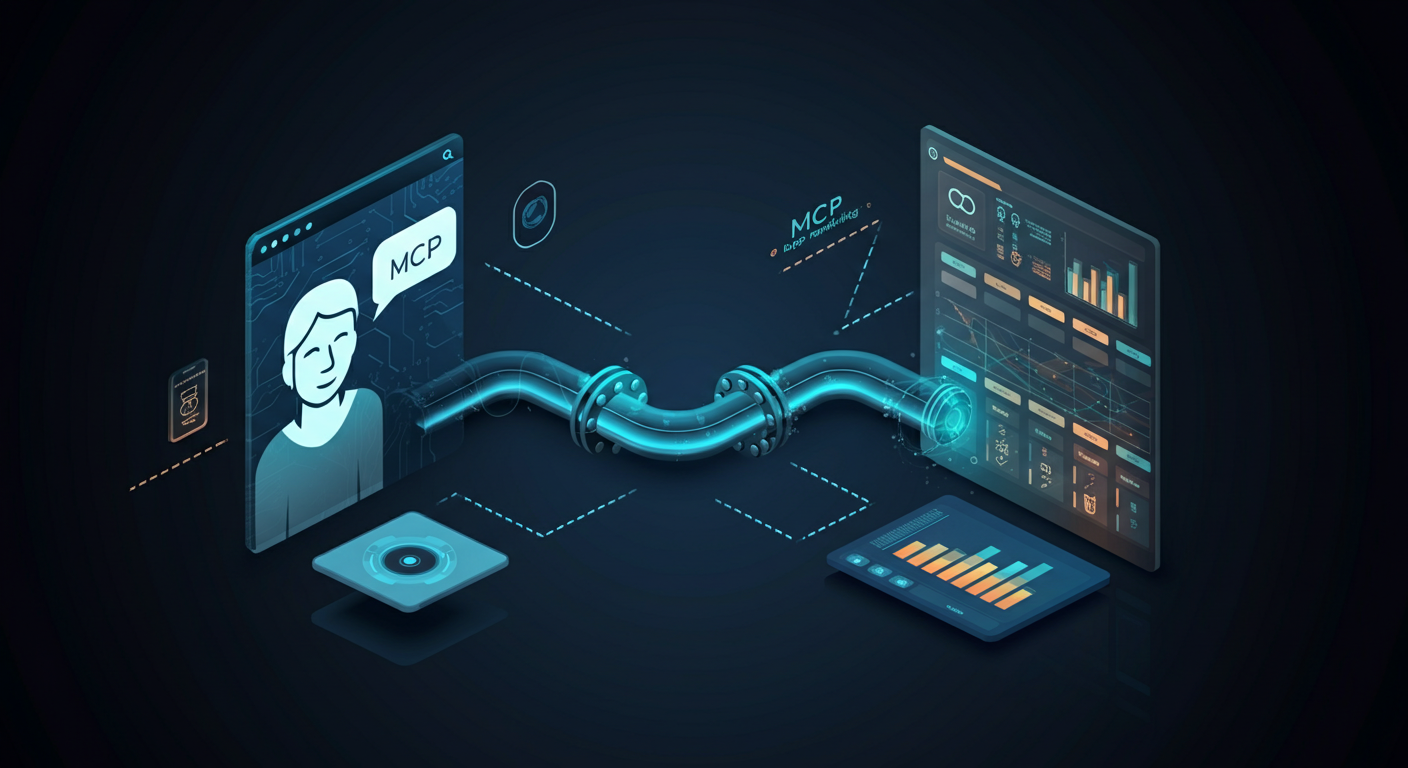
This is where Appnalysis comes in. Appnalysis provides structured app market intelligence that AI assistants can access directly through MCP. Rather than attempting to infer market conditions from fragmented web content, an AI assistant can query dedicated mobile intelligence datasets and provide answers grounded in evidence.
Questions that previously required manual research can become conversational:
Which competitors are gaining momentum?
What SDKs are most common in this category?
Which apps have expanded into new territories recently?
How does one market compare with another?
What trends are emerging across the mobile ecosystem?
The experience remains conversational. The difference is that the underlying evidence is available.
The Bigger Shift
Mobile intelligence is only one example of a much broader trend. Every industry is facing the same challenge. Financial services, healthcare, legal services, compliance, manufacturing, research, and countless other sectors all possess valuable information that cannot be fully understood through web search alone.
As AI becomes embedded into everyday workflows, organisations will increasingly differentiate themselves not by having access to AI, but by having access to high-quality context. The winners will not simply have better models. They will have better data, better systems, and better connections between the two.
That is why the future of AI is becoming a story about context, not just capability. When an AI assistant cannot answer a question, the issue is not always intelligence. Sometimes it simply cannot see the full picture. Give it access to the right information, and everything changes.
Related reading
- We Asked Claude a Simple App Store Question. Here's What Actually Happened.
- What Is Mobile App Intelligence? And Why App Analytics Alone Are No Longer Enough
- The Software Industry Is Growing Up
Learn more about Appnalysis
Explore how Appnalysis turns mobile app intelligence into evidence-backed answers:
Try these live in Ask Appnalysis.
What good mobile app research looks like when AI falls short
For the app data platform behind these answers, see the Appnalysis product.