Claude Code MCP and Xcode MCP: Add Agentic Knowledge Specialists
The coordinator agent you installed (Claude Code, Codex, Cursor, whichever) is the first half. Agentic MCP knowledge specialists connected to that coordinator are the second half, and the difference matters most where it currently hurts most: compliance decisions developers are increasingly on the hook for.
Most developers in 2026 think adding Claude Code to Xcode, or Cursor to their existing setup, completes their AI coding stack. It does not. The coordinator agent (Claude Code, Codex, Gemini, Cursor, whichever) is the first half of the setup. The knowledge specialists that coordinator can call via MCP are the second half, and most developers have not installed any yet.
Every AI coding agent worth using in 2026 shares the same limit. Claude Code, running as Claude Agent inside Xcode or directly in the terminal. Codex, exposed through the Xcode Intelligence pane or its own surfaces. Gemini, coordinating Android Studio’s agent mode or working alongside code in other environments. Cursor, JetBrains AI Assistant, Copilot in its chat and agent modes. Each of them can reason brilliantly about the code the developer has access to. None of them can reason about the code peers in the same category have shipped, unless the developer leaves the IDE, does research elsewhere, and brings findings back manually.
That gap has been tolerable while the pace of shipping was manageable and while the questions the developer was trying to answer were mostly about their own code. Neither condition still holds in 2026. Pace has accelerated meaningfully with AI-assisted development, and the questions the developer is on the hook for have expanded to include compliance, platform policy, and AI governance decisions that require real evidence about how other teams are handling the same problems.
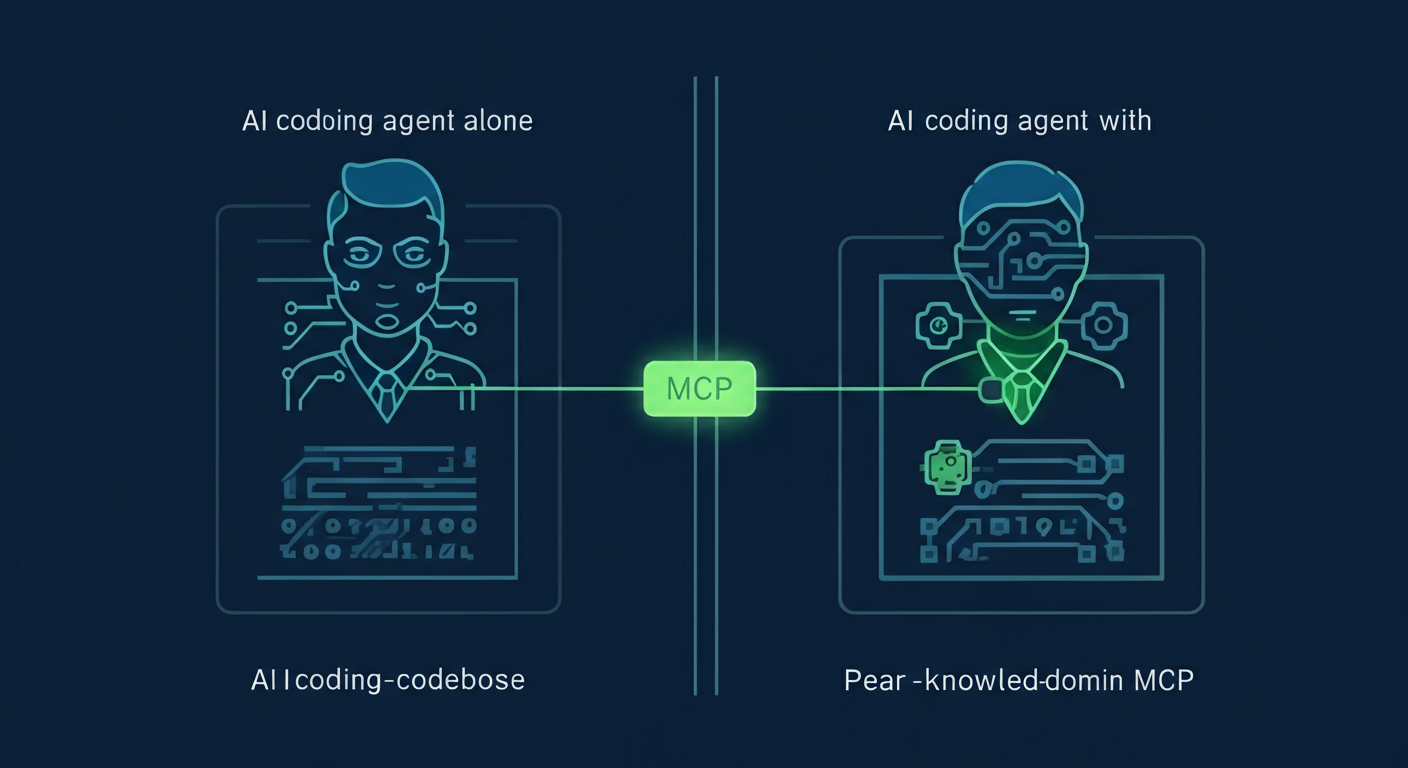
Knowledge-domain MCP servers close this gap. They give AI coding agents access to information beyond the developer’s own environment, in the same reasoning flow the agent already runs. Understanding what these servers are and how they differ from the code-context MCP servers most developers already use is worth the read, because the difference decides whether the AI can actually help with the questions that matter most.
What Agentic MCP Actually Extends
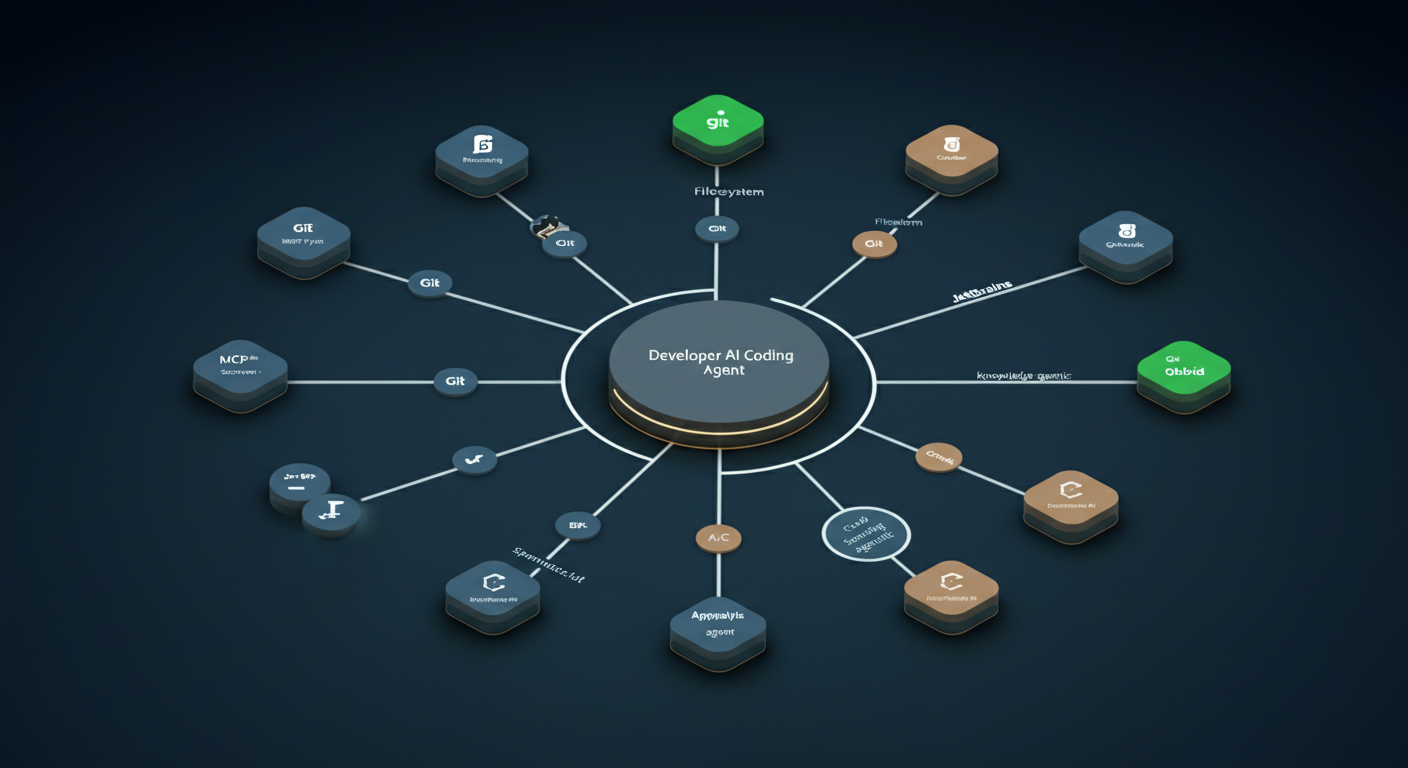
The Model Context Protocol is a standard for AI assistants and agents to call external tools and data sources as part of their workflow. Most developers who have added an MCP server to their AI coding agent have added a code-context one: Git, filesystem, GitHub, JetBrains, Serena, or similar. These extend the AI’s reach into the developer’s own environment. Useful, but they answer questions the developer could roughly already have answered from their own memory of their own code.
Knowledge-domain MCP servers extend the AI’s reach into information beyond the developer’s own environment. Documentation servers, search-based servers, and (relevantly for mobile developers) Appnalysis for evidence about shipped apps across the market. These answer questions the developer could not have answered from their own memory, because the information does not live in their environment.
Two dimensions of distinction are worth naming clearly.
Code-context versus knowledge-domain. Code-context servers connect the AI to what the developer already has access to. Knowledge-domain servers connect it to what the developer does not.
Passive versus agentic. Passive MCP servers wrap a data source or existing service and let the AI reason over what they return. Git MCP servers wrap Git commands. Filesystem servers wrap file operations. The AI does the reasoning, the MCP server does the retrieval. Agentic MCP servers do their own reasoning before returning. Ask an agentic MCP server “what is happening in the meditation app category” and it does not hand back raw data for the AI to interpret. It hands back interpreted analysis with linked evidence. The AI is calling a specialist that has already done the domain work, rather than doing the domain work itself with raw inputs.
Appnalysis is knowledge-domain and agentic. That combination is deliberate. The knowledge-domain part is what closes the gap between what the AI can see about your code and what it can know about peer apps. The agentic part is what makes the answers useful rather than just accessible. For the fuller architectural argument about why an agentic architecture matters for mobile app intelligence specifically, see Appnalysis Is a Mobile Intelligence Agent.
Other MCP servers may become agentic over time as the ecosystem matures. The specific domain expertise (reading app packages, comparing against similar apps, understanding compliance context, evidence-first methodology) is where the real differentiator sits. The agentic architecture is the delivery mechanism.
Where This Matters Most: Compliance Decisions Developers Now Own
The strongest single use case for knowledge-domain MCP servers is not competitive intelligence for its own sake. It is compliance and platform decisions that used to sit with legal or product but increasingly land as code the developer writes or configuration the developer edits.
Privacy manifests. Data Safety declarations. App Store privacy labels. EU AI Act compliance requirements for AI features. Cookie consent implementations. Cross-border transfer handling. Age assurance thresholds. Each of these is now something developers own directly, often without a compliance specialist reviewing the specific code that implements them. The developer makes the call and ships.
Making that call well requires understanding what patterns peers have adopted. Not to copy them exactly, but to understand what has been tested in production and what has failed. Compliance guides are written for compliance leaders, not developers. Platform documentation covers how to implement, not what patterns work across the industry. Peers who have already implemented in production are the missing signal, and Appnalysis MCP surfaces that signal in the same reasoning flow the AI coding agent already runs.
This ties directly to the argument in Everyone Talks About Technical Debt, Nobody Talks About Legal Debt. Technical debt eventually got proactive tooling: Dependabot, Snyk, GitHub security alerts, npm audit. Legal debt has not had the equivalent visibility because nobody has been reading app packages to check what they actually collect against what they declare. Knowledge-domain MCP servers extend proactive visibility into the compliance dimension in exactly the way Dependabot extends it into the dependency dimension. Different debt, same discipline.
A concrete example. A developer is implementing App Store privacy label updates for a new analytics SDK. Without a knowledge-domain MCP server, they ask their AI coding agent what to declare, and the AI answers from training data with generic guidance. With Appnalysis connected, they can ask the AI to compare what similar peer apps in the same category have declared for the same SDK, and what those peer apps actually collect at runtime based on their app packages. The answer combines their own code context with real peer evidence, and the resulting declaration is defensible in a way the generic guidance is not.
The Coordinator Agents Worth Naming
The specific AI coding agents that support MCP in 2026 are worth naming because developers want to know their tool is covered before they read further. This is not an exhaustive list but it covers the coverage set most developers building mobile apps will actually encounter.
Claude Code. Appears as Claude Agent in the Xcode 26 Intelligence pane and runs directly in the terminal outside of Xcode. Same underlying product, different surfaces. Claude Code has native MCP server support and configuration is consistent across surfaces.
Codex. Available in the Xcode 26 Intelligence pane and via OpenAI’s own surfaces. Supports MCP server configuration through OpenAI’s agent configuration.
Gemini. Coordinates Android Studio’s agent mode and appears in the Xcode 26 Intelligence pane. Google documents MCP configuration for Gemini in Android Studio as part of Gemini’s agent mode setup.
Cursor. The AI-native IDE that has become a default for many developers in 2026. Cursor has native MCP support and configuration follows Cursor’s own agent settings.
JetBrains AI Assistant. For developers working in IntelliJ, WebStorm, PyCharm, and the rest of the JetBrains suite. Supports MCP through JetBrains AI Assistant’s configuration.
Copilot in agent mode. GitHub’s Copilot supports MCP in its agent mode, expanding what has traditionally been an autocomplete tool into a coordinator agent that can call external MCP servers.
Each of these coordinates between the developer’s environment and any MCP servers configured for it. Adding a knowledge-domain MCP server like Appnalysis to any of these gives the coordinator access to peer app evidence in the same reasoning flow it already uses for local code context.
The specific setup steps vary by coordinator and by platform version, and they change more frequently than any editorial article should try to keep up with. For current setup instructions across all supported coordinators, see the Appnalysis MCP setup docs.
What Developers Actually Ask Once It Is Connected
Three question patterns come up repeatedly in real developer usage. Compliance first because that is where the value lands hardest.
Compliance and platform pattern checks. “What does my current implementation of App Store privacy labels look like compared to peer apps in the same category? Where do declarations diverge from what apps actually collect at runtime? What patterns are peers using for the new AI Act transparency requirements on features similar to mine?”
The AI can now answer these with linked evidence from peer app packages, store listings, and privacy declarations rather than generic guidance. That is the difference between “here is what the guidance typically recommends” and “here is what these specific peer apps have actually shipped and here is where their declarations diverge from their runtime behaviour”.
SDK and library choices informed by peer evidence. “Which analytics SDKs do peer language learning apps ship with? What versions are current? Where do the biggest apps in this category converge on architecture and where do they diverge?”
Without a knowledge-domain MCP server, the AI answers from training data, which is likely outdated and generic. With Appnalysis connected, it reads the current app packages of peer apps, reports the actual SDKs and versions shipped in their most recent builds, and cites the evidence directly. That is the difference between architectural guessing and evidence-based decision making.
Pre-decision impact analysis. “We are about to add Segment to our stack. Which peer apps in our category ship it, and what did it do to their app package size? Are there teams shipping without it that have different trade-offs worth understanding?”
This question has historically required either a manual audit or an educated guess. With Appnalysis connected, the AI can compare peer apps that ship Segment against peer apps in the same category that do not, and report the actual app package size differential with linked evidence. That is a genuinely defensible answer to bring to a technical decision, not a vibes-based one.
For the setup steps that make these questions answerable in your specific coordinator agent, see the Appnalysis MCP setup docs.
AI Coding Agents Plus Knowledge Specialists: The Emerging Pattern
The bigger observation worth naming is that developer AI workflows are heading toward multiple specialist agents rather than single monolithic AIs. Code-context agents for the developer’s own environment. Knowledge-domain agents for external evidence. Documentation agents for API lookups. Testing agents for QA. Each specialist gets deeper than a general-purpose AI can, and the coordinator brings the specialists together.
This is the same pattern the software industry has been settling into elsewhere. Monolithic services get decomposed into specialists. Coordinator layers manage the specialists. The result is systems that are more capable and more maintainable than the monoliths they replaced. AI agent workflows are following the same evolution, and MCP is the protocol that makes it practical.
The relevance for Appnalysis specifically is that it is one specialist in that emerging ecosystem. It does not replace the developer’s primary AI coding agent. It does not replace their code-context MCP servers. It closes the specific gap between what the AI can see about the developer’s own code and what it can know about the shipped apps of peers building in the same category. That is a defined role and it fits alongside the other specialists in the stack, not in place of them.
This ties to the broader thesis in The Software Industry Is Growing Up. As the industry matures, evidence-based practice is becoming as commercially important as the product itself. AI coding workflows that combine local code context with real peer evidence are what evidence-based practice looks like at the developer level. Knowledge-domain MCP servers are the mechanism that makes it possible.
A Note on AI Evidence and Safety
One angle worth naming, particularly for developers building AI-embedded features or working in regulated industries.
When an AI coding agent makes recommendations based on Appnalysis data, those recommendations are traceable to specific evidence: a release note, a store listing declaration, an SDK version in a specific peer app’s package. The developer can audit the reasoning by inspecting what Appnalysis returned and confirming the AI’s synthesis matches. That is a different quality of AI recommendation than one produced from training data alone, where the reasoning cannot be audited and the sources cannot be verified.
For developers whose organisations have AI governance frameworks, cyber insurance renewals that ask about AI decision-making, or regulated products where AI recommendations need audit trails, this evidence-first approach is a real differentiator. It ties directly to the argument in the legal debt article: auditable AI evidence is what auditable AI workflows need. Passive data returned to an LLM does not audit as well as agentic analysis with linked sources from apps peers have actually shipped.
Most developers working on standard features will not care about this dimension day to day. Developers working on AI-driven decisions that affect users or need to be defended to auditors will care about it a lot.
Try It
Adding a knowledge-domain MCP server to your AI coding agent changes what the agent can help you decide. The setup depends on which coordinator agent you use, but it typically takes about five minutes.
For the current setup steps across Claude Code, Codex, Gemini in Android Studio, Cursor, JetBrains AI Assistant, and Copilot in agent mode, see the Appnalysis MCP setup docs.
If you want to try Appnalysis without configuring an MCP server yet, use Ask Appnalysis directly in the browser.
Ask a compliance or peer-evidence question you have been leaving on the table. See what your AI comes back with when it can actually reason about the apps peers have shipped in your category, not just the code you have already written.
Frequently Asked Questions
Related Reading and Further Reading
Internal cluster context:
- Appnalysis Is a Mobile Intelligence Agent - the fuller architectural argument for why an agentic MCP server is different
- Everyone Talks About Technical Debt, Nobody Talks About Legal Debt - why proactive visibility for compliance matters the same way proactive dependency tooling did
- The Software Industry Is Growing Up - the broader thesis this article extends
- Your App’s Compliance Roadmap - the compliance context developers should understand for their own apps
Platform documentation for further reading:
- Apple: Giving external agents access to Xcode - Apple’s own documentation for the Xcode 26 external agent architecture
- Google: Add an MCP server to Gemini in Android Studio - Google’s own documentation for Android Studio Gemini agent mode MCP setup
Setup:
- Appnalysis MCP setup docs - current setup steps for Claude Code, Codex, Gemini, Cursor, JetBrains AI Assistant, and Copilot in agent mode