AppMagic vs Appnalysis: App Competitive Intelligence
A product comparison for teams evaluating AppMagic and app competitive intelligence tools in 2026, what each does well, and where Appnalysis sits alongside or as an alternative depending on your workflow.
If you are evaluating AppMagic in 2026, you are almost certainly comparing app competitive intelligence tools rather than shopping for a specific feature. AppMagic has built a strong reputation as an accessible, agency-friendly market data platform with a well-regarded taxonomy and standout ad intelligence. Whether it is the right tool for your team depends less on what AppMagic can do and more on what job you are trying to get done.
The mobile app intelligence category is not one job. It is several. Market sizing and pitch preparation are one job. Ad and creative analysis for casual games is another. App competitive intelligence and evidence-based reasoning is a third. AI-assistant-led workflow and agent-based automation are increasingly a fourth. AppMagic is genuinely excellent at some of these and does not attempt others. Appnalysis is built for the ones AppMagic does not attempt. Most working teams end up using both, or picking based on which job is central to their week.
This article walks through what AppMagic is built for, where it excels, where its workflow model reaches its limit, and where Appnalysis sits in the same evaluation. If your primary work is dashboard-based market research, AppMagic is a serious contender. If your primary work is AI-assisted reasoning with linked evidence, or if compliance and regulatory dimensions matter to your deliverables, you are looking at a different category of tool.
What AppMagic Is Built For
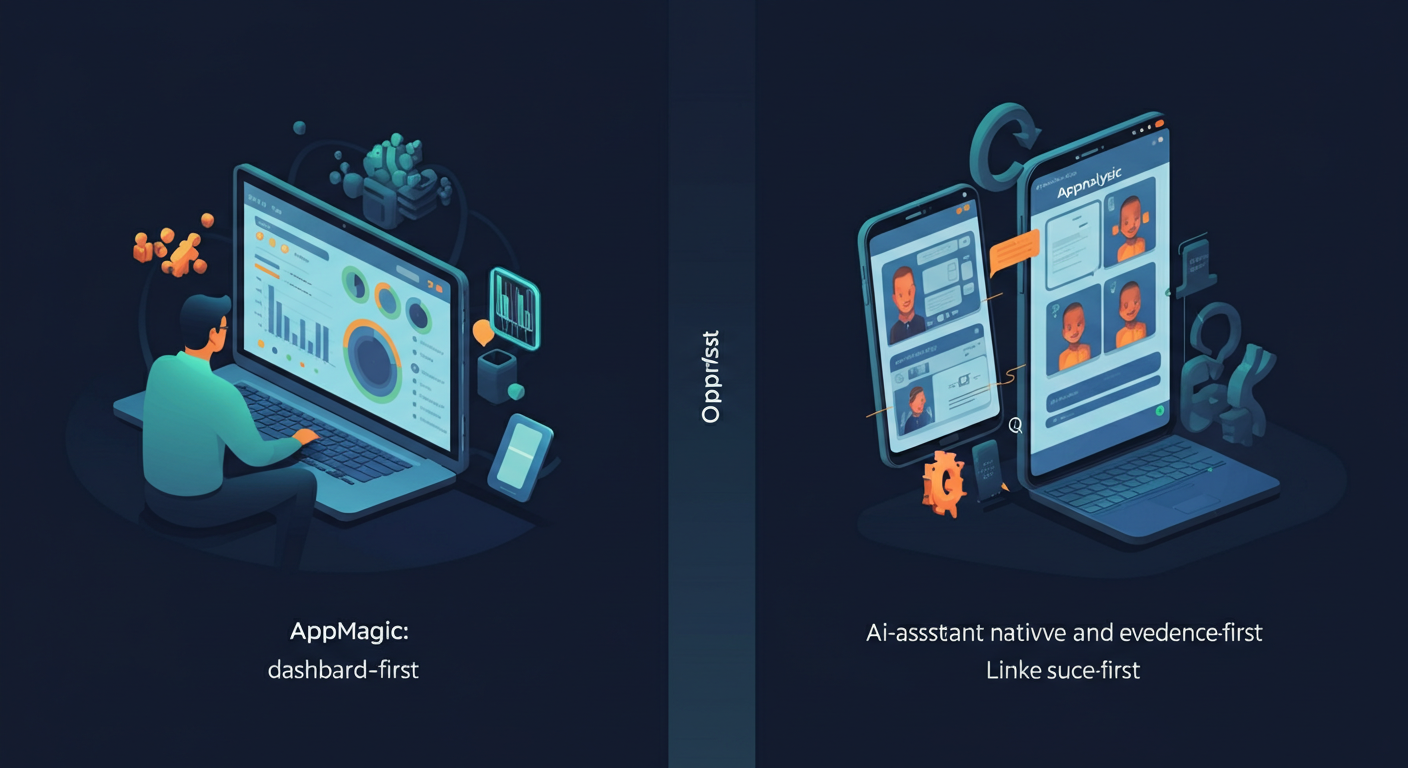
AppMagic is a mobile app market intelligence platform from AppMagic Inc., positioned as an accessible, dashboard-first tool with roughly 18 integrated capabilities aimed at market researchers, creative strategists, and product teams working across the App Store and Google Play. Their specific strengths are worth naming clearly because they are genuine.
Ad intelligence is AppMagic’s strongest single differentiator. Their creative library reportedly contains over 150 million videos with impressions-based analysis and breakdowns by country and ad network. For teams doing creative research, competitive ad benchmarking, or user acquisition strategy in mobile games specifically, this is a category-leading capability. Sensor Tower’s ad intelligence is broader in some dimensions but AppMagic is often preferred by casual and midcore game teams for the depth of creative library analysis.
Monetisation intelligence for casual and midcore mobile games is another genuine strength. AppMagic continuously collects and analyses monetisation features from top-grossing games, giving product teams visibility into pricing strategies, offer design, and in-app purchase mechanics that are being tested in the market. Their LiveOps and Updates Calendar tool includes deconstructions of over 200 top-performing games, which is unusually specific for the category.
Taxonomy classification is where AppMagic quietly outperforms some larger competitors. Their app genre classification is well-regarded by agency strategists for mapping how the market actually thinks about categories, which is not always how the store’s own category tags work. For pitch-stage research where the taxonomy has to match how the client and the strategy team think about competition, this is a real advantage.
AppMagic is also described in third-party reviews as friendlier and more approachable than Sensor Tower or AppFigures, and priced more accessibly, though they quote rather than publish.
If your job is dashboard-based market research, creative strategy for casual games, or pitch-ready market framing, AppMagic is genuinely a strong choice. That is a real category of work and AppMagic serves it well.
Where AppMagic’s Workflow Model Reaches Its Limit
Everything in the section above assumes a dashboard-first workflow. That is where AppMagic lives, and for the jobs it is built for it is genuinely excellent. The limit shows up when the team’s workflow shifts away from dashboards.
Three specific patterns bring this limit into focus.
The first is AI-assisted daily workflow. Increasingly, strategists, product managers, and agency creatives are working alongside AI assistants like Claude or ChatGPT rather than opening dashboards for every question. When the question is “why did competitor X’s ratings improve this quarter” or “what does the release history of the top three midcore games in this category tell us”, the natural place to ask it is the AI assistant, not a browser tab. Dashboard tools cannot answer from that context. The user has to leave the assistant, open the dashboard, run the analysis, and copy the finding back.
The second is evidence-based reasoning with linked sources. AppMagic provides estimates and analysis based on their data model. Those estimates are useful for market framing but they are not the same thing as a claim that can be traced back to a specific release note, a specific review cluster, or a specific store metadata change. When a strategist needs to defend a recommendation to a client or an executive with “here is where I saw the evidence”, dashboard estimates do not close that loop. The reasoning has to happen somewhere else.
The third is autonomous agent workflow with audit requirements. This is the emerging pattern that will matter most over the next eighteen months. Enterprises are increasingly running AI agents on production tasks, and governance conversations are catching up. When an AI agent makes a decision based on app intelligence, the audit question is not just “what did the agent decide” but “what intelligence did it use and can we verify that intelligence was correct”. A tool that provides estimated numbers from a proprietary model is difficult to audit. A tool that provides evidence-first analysis with linked publicly verifiable sources is straightforwardly auditable.
None of this is a criticism of what AppMagic is built for. It is a description of what dashboard-first tools were not built to do. As AI-embedded workflows become more common, the workflow model matters more, and that is where the category is genuinely shifting.
At the time of writing, Appnalysis is the only established platform in the mobile app intelligence category with native MCP (Model Context Protocol) integration. What this means practically is that AI agents like Claude or ChatGPT can call Appnalysis directly as part of an autonomous workflow, without a human ever opening a dashboard. AppMagic, Sensor Tower, Similarweb, and other dashboard-first tools in this space do not currently offer this. Their intelligence lives behind a browser interface and requires human interaction to access. For teams whose workflow is increasingly AI-assistant-led, or for enterprises where AI agents are running production tasks with audit requirements around the intelligence they used to make decisions, this workflow difference matters more than any single feature difference. Dashboard tools may add MCP support in future. As of this article’s publication, Appnalysis has it and they do not.
What Appnalysis Is Built For in App Competitive Intelligence
Appnalysis is the platform this article is published on, and its specialisation is different from AppMagic in ways that are worth naming clearly rather than as a marketing pitch.
Evidence-first methodology means every insight links back to a publicly verifiable source. A release note. A review cluster. A screenshot change. A store listing declaration. A regulatory filing. When Appnalysis says an app is doing something, the source is traceable and independently verifiable. That is a different data model from estimate-driven tools, and it serves the specific job of reasoning with defensible evidence.
Regulatory and compliance analysis sit alongside market intelligence as first-class capabilities. Appnalysis reads what apps actually declare and what they actually contain, which supports compliance verification workflows that dashboard tools are not built for. Teams working on data privacy questions, App Store or Google Play submission risk, or client-facing compliance recommendations use Appnalysis for the layer that estimate-based tools do not reach.
MCP-native integration means Appnalysis participates in AI-assisted workflows as a first-class citizen. An agent-led workflow can query Appnalysis for reasoning about specific apps without any human involvement, which fits how AI agents are increasingly deployed in enterprises and how AI-assisted daily work is increasingly done in product and agency teams.
None of this makes Appnalysis a like-for-like replacement for AppMagic. AppMagic’s ad intelligence library and monetisation intelligence for casual games are stronger than what Appnalysis offers on those specific dimensions. Appnalysis is built for a different job. The question is which job matters more to your team.
When to Pick Which: AppMagic Alternatives and When to Use Both
Pick AppMagic when your primary work is dashboard-first market research, ad intelligence and creative strategy for casual games, monetisation strategy for midcore game teams, or pitch-stage market framing. Their taxonomy classification and creative library depth are genuine strengths and the interface is friendlier than most incumbents.
Pick Appnalysis when your primary work involves evidence-based reasoning with linked sources, AI-assisted or AI-agent workflows, compliance verification alongside market intelligence, or client-facing deliverables where auditability of intelligence matters. The workflow model is different and it fits AI-embedded working patterns in a way dashboard tools do not.
Consider both when the team’s work spans multiple jobs, which is common for agencies pitching to clients. AppMagic can provide the market framing and creative research for the pitch. Appnalysis can provide the evidence-based reasoning and compliance verification that turns the pitch into a defensible recommendation. The combination is genuinely stronger than either alone for teams whose deliverables need both dimensions.

Try Appnalysis Against an App You Already Know
If you are evaluating AppMagic and want to see how Appnalysis reasons about the same market you are researching, the fastest path is to ask a specific question about an app in your category. Bring the market data you have and ask Appnalysis to explain the story behind it.
- The Appnalysis platform
- Appnalysis pricing
- Try a question in /ask
- How Appnalysis works with Claude for ASO workflows
Frequently Asked Questions
Related Reading
- Appnalysis vs Sensor Tower: An Evidence-First Alternative for Mobile App Intelligence - the deeper comparison for the intelligence category
- Appnalysis Is a Mobile Intelligence Agent - how Appnalysis works with AI assistants via MCP
- What Is Mobile App Intelligence? - the underlying category this article compares tools within