SimilarWeb Alternatives: Mobile App Intelligence Compared
Two different starting points for two different jobs. Where panel modelling reaches its limit and where app-level evidence closes the gap, honestly compared.
If you are evaluating a SimilarWeb alternative for mobile app intelligence, the honest place to start is what each platform is actually built to measure. SimilarWeb grew up measuring the web. Its mobile app product is a natural extension of that heritage: panel-modelled installs, active users, engagement, and audience overlap, designed to sit alongside its web traffic estimates. For a team trying to understand cross-channel behaviour across web and app together, that integrated view is genuinely useful.
Appnalysis starts somewhere else. It treats each app as a primary source of evidence (store listings, reviews, release notes, screenshots, regulatory signals) and reasons over that evidence to answer specific product, strategy, and risk questions. Both platforms are useful. They are not interchangeable, and the alternatives to SimilarWeb worth serious consideration each answer a different subset of the questions a working team asks.
The mobile app intelligence category is not one job. It is several. Cross-channel audience modelling is one job. Understanding what a specific competitor actually shipped in their last release is another. Compliance verification across a portfolio of apps is a third. AI-assisted reasoning about peer apps is increasingly a fourth. Panel-based tools like SimilarWeb are excellent at some of these. Evidence-first tools like Appnalysis are built for the ones panels cannot reach. Most working teams end up using both, or picking based on which job is central to their week.
What SimilarWeb Does Well
SimilarWeb is one of the strongest cross-channel intelligence platforms in the market at the time of writing, and it deserves fair treatment for what it is genuinely good at.
Audience modelling and cross-platform overlap is the standout strength. If the question is “do users of my app also use this competitor’s web product”, SimilarWeb’s panel is one of the best ways to estimate that at scale. The geographical breadth is real, and the integration between web analytics and app analytics inside a single platform is a genuine convenience for teams who want a single vendor for both dimensions.
Panel-modelled traffic estimates work well for questions where directional accuracy matters more than release-level specificity. Market sizing. Category share. Long-term trend analysis. Executive reporting where the audience wants to see one number rather than a dozen sources. SimilarWeb is built for those questions and it serves them cleanly.
SimilarWeb also covers standalone GenAI applications as part of their app intelligence coverage. That is genuinely current and reflects the platform continuing to expand alongside the market. Their platform is not standing still.
If your team’s primary work is cross-channel market analysis where SimilarWeb’s panel model produces the directional answers you need, SimilarWeb is a strong choice. That is a real category of work and SimilarWeb serves it well.
Where Panel Modelling Reaches Its Limit
Every panel-based measurement model has a natural boundary. SimilarWeb is no exception, and its own methodology acknowledges the boundary honestly. Panel data can tell you a competitor’s engagement is trending down. It cannot tell you why. Panel data can show an app’s install curve steepening in a specific market. It cannot point at the release that caused it.
Three specific patterns bring this limit into focus.
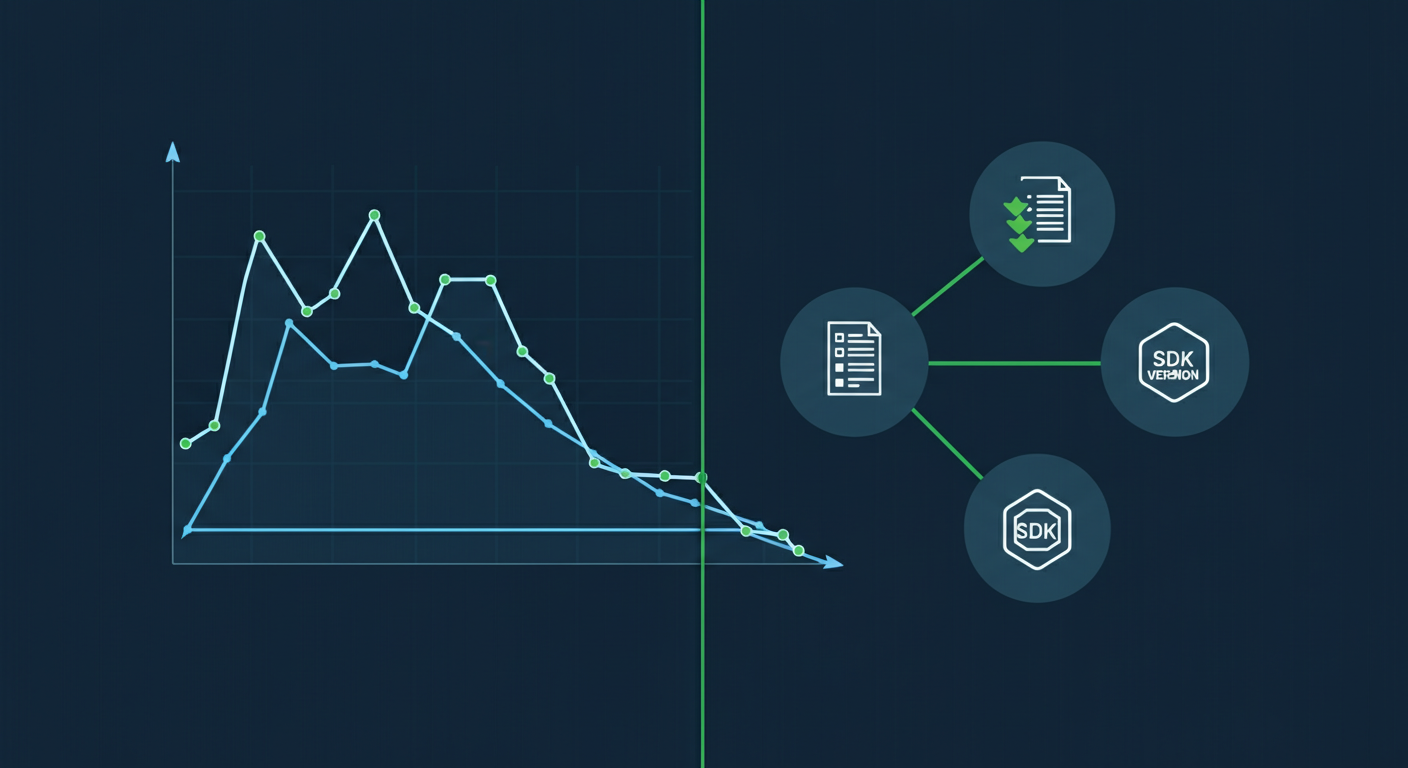
The first is release-level attribution. When a competitor app’s engagement drops, panel data will eventually show the trend. Appnalysis can point at the release that introduced the regression, the cluster of one-star reviews that name the new bug, the developer’s response in the app store comments, and the specific SDK change visible in the app package. That is auditable evidence chain, not extrapolation from a panel.
The second is in-app content and features. Panel data measures behaviour around apps: installs, sessions, active users, retention. It does not read what is actually inside the app. New features shipped in the last release, new SDKs bundled, new permissions requested, new AI features embedded, new data collection declared or not declared. All of that requires reading the app package directly, which panel-based measurement is not designed to do.
The third is compliance and regulatory posture. Panel data cannot answer “which competitor apps in this category ship a specific SDK”, “which apps declare data collection they do not appear to be doing”, or “which competitor’s privacy manifest changed between releases”. These are increasingly the questions that legal, risk, and compliance teams need answered, and they need the answers with linked evidence rather than panel estimates.
None of this is a criticism of what SimilarWeb is built for. It is a description of what panel-based measurement was not built to do. As mobile app intelligence expands into evidence-based reasoning for compliance and regulatory work, the workflow limit matters more, and that is where a complementary tool earns its place in the stack.
SimilarWeb Competitors in the Mobile App Intelligence Space
Being honest about the competitive landscape helps the reader understand where each tool fits. The mobile app intelligence category has several established platforms in 2026, and they occupy meaningfully different positions.
Sensor Tower is the market-breadth incumbent. Broad geographical coverage, strong enterprise reporting, established since the mid-2010s. Fits teams that need consolidated market data across many categories with the depth to segment by region and platform.
data.ai (formerly App Annie) has similar market-breadth positioning with particular strength in gaming intelligence and mid-tier pricing that lands accessibly for larger agencies. Their enterprise coverage is genuinely deep.
AppMagic sits at a more accessible price point with particular strength in ad intelligence, monetisation intelligence for casual games, and taxonomy classification. Fits agencies and product teams doing pitch-stage research or creative strategy work. Covered in more depth in AppMagic vs Appnalysis: Different Jobs in App Competitive Intelligence.
AppTweak focuses on ASO (App Store Optimisation), keyword tracking, and creative testing for the paid acquisition and store presence layer. Fits growth teams whose primary job is store performance.
Appfigures targets indie developers and small studios with an approachable pricing model. Fits solo developers and small teams who need core intelligence without enterprise complexity.
Appnalysis starts from the app itself as a primary source of evidence rather than from panel-modelled behaviour. Fits teams whose questions need release-level attribution, compliance verification, AI-assisted reasoning about peer apps, or client-facing recommendations where auditability matters. Covered in more depth across the intelligence cluster.
Each tool serves a different job. Serious teams often use two or three in combination, with SimilarWeb typically providing the cross-channel dimension and a mobile-specific tool providing the app-level depth.
SimilarWeb App Intelligence in Context
SimilarWeb’s app intelligence product does specific things well. Install and download estimates at scale. Active user modelling. Cross-platform audience overlap between web and app properties. Retention curves and engagement metrics derived from panel data. Category rankings and trend analysis. Coverage across major markets globally.
Where it reaches the limit of what panel modelling can produce is in the specifics of what apps actually contain and do. Panel data models user behaviour around apps. It does not read what is inside them. For teams whose questions require both dimensions (the behavioural picture panels produce, and the app-level evidence they cannot), a stack that combines SimilarWeb with an evidence-first tool like Appnalysis is genuinely stronger than either alone.
This is the pattern that has emerged across the intelligence cluster. Different tools serving different jobs, working alongside each other rather than replacing each other. SimilarWeb for cross-channel behaviour. Appnalysis for app-level evidence. Neither replaces the other, and both do their own job better than a single tool trying to do everything.
When to Pick Which, and When to Use Both
Pick SimilarWeb when your primary job is cross-channel audience behaviour, market sizing across web and app together, or executive reporting where directional accuracy from a single vendor matters more than release-level specificity.
Pick Appnalysis when your primary job involves evidence-based reasoning with linked sources, compliance verification alongside market intelligence, AI-assisted workflow (Claude Code, Cursor, and other MCP-supporting AI coding agents can query Appnalysis directly), or client-facing deliverables where auditability of intelligence matters.
Consider both when the team’s work spans multiple jobs, which is common for enterprise marketing and strategy teams. SimilarWeb can provide the cross-channel behaviour picture. Appnalysis can provide the app-level evidence that turns pattern observations into defensible recommendations. The combination is genuinely stronger than either alone for teams whose deliverables need both dimensions.

How Appnalysis Fits Into Your Tool Stack
Appnalysis is not a replacement for SimilarWeb. It is a complementary tool that closes the specific gap between panel-modelled behaviour and app-level evidence. Teams typically use SimilarWeb for the cross-channel measurement it does well, and Appnalysis for the release-level, compliance, and evidence questions that panels cannot answer.
The Appnalysis registered tier already covers the top 25 apps globally, which is enough to validate the platform on a real evaluation question before any contract conversation. Bring a real competitor you are considering and ask Appnalysis what changed in their last three releases. Compare the cited evidence to the panel trend in your existing tool. That comparison is usually the fastest way to see where each tool’s answer is strongest.
For teams working with AI coding agents (Claude Code, Cursor, Codex, Gemini in Android Studio, JetBrains AI Assistant), Appnalysis is available as an MCP knowledge specialist that agents can query directly. That is covered in more depth in Your AI Coding Agent Only Sees Half the Picture, which explains how knowledge-domain MCP servers extend AI coding agents beyond their own codebase into peer app evidence.
Try Appnalysis Against an App You Already Know
The fastest path to understanding whether Appnalysis fits your team’s work is to ask a specific question about an app in your category. Bring the market data you have from SimilarWeb or another tool, and ask Appnalysis to explain the release-level story behind it.
Frequently Asked Questions
Related Reading
- Appnalysis vs Sensor Tower: An Evidence-First Alternative for Mobile App Intelligence - the deeper comparison for the incumbent alternative
- AppMagic vs Appnalysis: Different Jobs in App Competitive Intelligence - the accessible-pricing alternative comparison
- Mobile App Analytics Tools Compared: What They Show and What They Miss - the wider analytics-versus-intelligence framing
- Your AI Coding Agent Only Sees Half the Picture - how Appnalysis works with AI coding agents via MCP
- Everyone Talks About Technical Debt, Nobody Talks About Legal Debt - why evidence-first analysis matters for compliance work